VeSync
- 4.4
- Rating
- 5.00M
- Installs
- Free
- Price

 Analysis by App-foxy
I spent time with VeSync as a lifestyle app for managing compatible smart-home and healthy-living products, and my overall impression is that it works best when you want several devices gathered in one place rather than scattered across separate manufacturer apps. Developed by Vesync, it presents itself as a practical control center instead of a social platform or a general wellness diary. That distinction matters: its usefulness depends heavily on whether your household already uses supported Vesync products.
The app is free and suitable for Everyone, which makes it easy to try without turning the first setup into a financial decision. It has been available since September 29, 2017, and the current version is 5.8.10. A 4.5 average from around 36 thousand ratings and more than a million installs suggest that it has found a steady audience, although popularity alone does not guarantee that every device or every user experience will feel equally smooth.
How clearly the app communicates and guides you
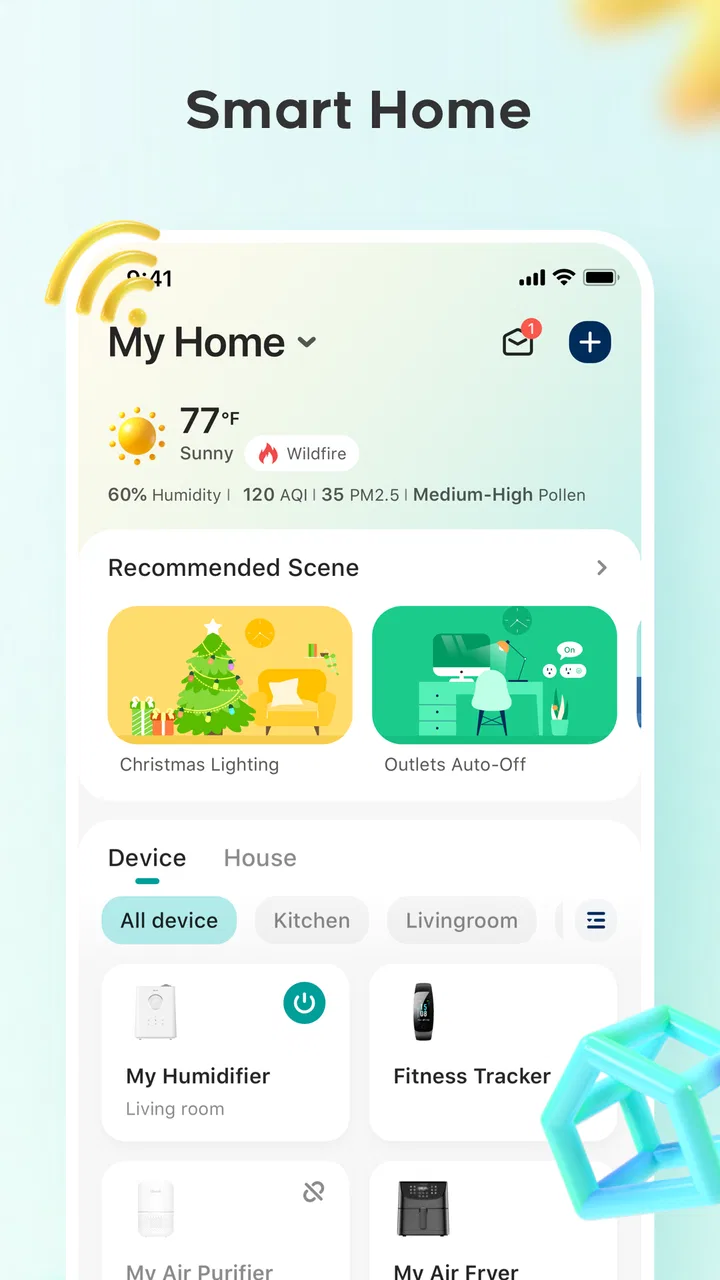
The first thing I noticed is that VeSync is organized around devices and actions rather than around long articles or complicated dashboards. That is a sensible choice for a smart-home tool. When I open it, I want to know which appliance is available, whether it is active, and what I can change. The interface generally makes more sense when I think of it as a remote control with account and automation features attached.
You May Also Like

 Blood Strike: 2.5 Anniversary
Blood Strike’s Loadouts Turn Every Drop Into a Tactical Gamble
A close look at Blood Strike’s custom loadouts: how fast access to signature weapons reshapes its battle royale rhythm, rewards preparation, and narrows the gap between fights.

 Pandora - Music & Podcasts
Pandora’s Music Is Easy to Start, but Harder to Recover
Pandora’s strength is its low-effort path from a seed to a station. Its weak spot is how much confidence it asks you to place in connection, setup, and quiet recovery.

 8 Ball Pool
 Is Built on Rivalries, Rematches, and Routine
A close look at the rivalries, rematches, shared routines, and unanswered safety questions that turn a quick pool match into a persistent mobile community.

 Samsung Music
’s Quiet Strength Is Playing What You Already Own
Its reach comes less from spectacle than from dependable access to a personal library. That simplicity is both the app’s strongest retention engine and its ceiling.

 AccuWeather: Weather Radar
AccuWeather Review: A Quick, Clear Forecast for Everyday Decisions
For everyday plans, the best forecast is the one you can understand quickly. AccuWeather makes rain timing, radar, and local conditions easy to act on, with a few trade-offs.

 Hill Climb Racing
Why Hill Climb Racing Still Turns Crashes Into One More Run
A tiny car, a bumpy hill and one more upgrade: Hill Climb Racing keeps resurfacing because its simple chaos makes every near-miss feel personal.
More From Our News Desk



For people who prefer readable layouts, the strongest part is the direct relationship between a device and its controls. A user does not have to interpret a large amount of lifestyle content before reaching the practical task. This is especially helpful when I am checking an air-quality product, adjusting a connected appliance, or reviewing a routine from a phone while moving around the home.
There is still a learning curve. VeSync is not one simple switch because different products expose different controls. A purifier, kitchen appliance, scale, or other connected device may present its own set of screens and terms. That inconsistency is understandable, but it means a new user may need to explore before knowing where a particular setting lives. I recommend adding one device at a time, naming it clearly, and testing the most important control immediately after setup rather than trying to configure the whole household in one sitting.
The app’s wording is most useful when it stays close to real actions. The less familiar parts are the areas that connect device status, schedules, and account-level organization. If you are helping a family member use it, a short demonstration is more effective than simply saying that the app is intuitive. Show them how to return to the device list, how to identify the active product, and where to find the setting they will use most often.
Readability also depends on the phone itself. Text size, contrast, screen magnification, and operating-system accessibility settings can make a meaningful difference, but the app should not be treated as automatically optimized for every visual need. I found it easier to use when I slowed down and avoided changing several options at once. For someone with low vision, a larger phone screen may be more comfortable than a compact one, and voice features built into the phone may help with navigation even when the app itself remains visually oriented.
The practical tip I would give first-time users is to build a small, predictable home screen routine. Keep the most-used device easy to identify, use plain names, and avoid relying on memory for controls that are buried inside a product-specific page. This reduces both visual searching and the mental effort of remembering which menu contains which action.
Navigation that works better with a clear household routine
VeSync becomes easier to understand when each device has a clear purpose. For example, naming products by room can be more useful than leaving them with model-style labels. “Bedroom purifier” tells me what I need faster than a technical name, especially when I am tired, wearing glasses, or trying to make a quick adjustment before leaving the house.
This approach also helps people who share a home but do not share the same technical confidence. One person can set up the devices, while another can use a small number of familiar actions without learning every available feature. That is a real advantage over maintaining several separate apps, where each one may use a different navigation pattern and account flow.
On the other hand, a single app can concentrate confusion as well as convenience. If several devices are added without a naming system, the central dashboard may become harder to scan than a single-purpose app. I would not add every available product immediately just because VeSync can bring them together. A smaller, well-organized device list is more inclusive than a crowded one.
Motor, sensory, and cognitive considerations in everyday use
For users with limited fine-motor control, a phone-based control system can remove the need to reach a physical button, bend toward an appliance, or repeatedly turn a small dial. I found this particularly useful as a general concept: the phone can be operated from a more comfortable position, while the device remains across the room. That can make routine adjustments less physically demanding.
However, the benefit depends on the action being available in the app and on the device already being connected. A phone does not eliminate every physical interaction. Initial setup, pairing, moving an appliance, checking a filter, filling a reservoir, or handling a kitchen product may still require hands-on work. VeSync can reduce repeated reaching, but it should not be mistaken for a complete substitute for physical access.
For users with motor tremors or reduced precision, the most comfortable workflow is usually to prepare settings in advance. If a device supports a recurring routine through the app, configuring it when you have time and steady attention may be easier than making several small adjustments during a busy moment. I would also avoid treating the phone as the only control method until I had confirmed that the household could still operate the device if the phone was unavailable.
Sensory needs are more complicated. A connected device can make it possible to check or change a setting without walking over to inspect it, which may help someone who has difficulty seeing a small indicator or hearing a quiet appliance signal. At the same time, the app itself may place important information on a screen, so people with visual, hearing, or cognitive disabilities may still need a personalized setup using phone-level tools and a trusted helper.
For a user who is sensitive to clutter, the app’s value comes from reducing the number of separate places to remember. One account and one device hub can feel calmer than a collection of unrelated applications. But the opposite can happen if the app displays too many device-specific options. I would start with the controls that matter for daily life and ignore advanced settings until there is a clear reason to use them.
People with memory difficulties may benefit from consistent device names and a written or spoken routine. For instance, “open VeSync, choose living room, check status” is easier to remember than a vague instruction to “use the smart-home app.” If another person provides support, shared naming conventions are important. The app cannot compensate for a household where one person labels products by room and another labels them by brand or function.
A realistic morning and evening workflow
Imagine a user who has a connected appliance in the bedroom and another in the living area. In the morning, they can check the relevant device from the phone before walking into the room, then make one adjustment if needed. In the evening, they can use the same device list to confirm the living-area product rather than physically checking every appliance. The advantage is not dramatic automation for its own sake; it is fewer trips, fewer repeated checks, and less dependence on small physical controls.
That workflow is also useful for someone recovering from an injury, living with fatigue, or managing a home from a seated position. I would still keep the routine simple. If the user must move through several screens, interpret unfamiliar icons, and remember different controls for each product, the accessibility benefit quickly shrinks.
Another useful scenario is supporting a relative from nearby without taking over the entire home. A helper can guide the person through a known device name and a single task, such as checking whether a product is running. This is easier when the household has already agreed on names and routines. The app is less helpful when the helper has to guess which product is which or explain every screen during an urgent moment.
Access in different places, schedules, and living situations
VeSync is most convincing in a home where connected products are used repeatedly throughout the day. It can be valuable for people who move between rooms, have limited stamina, or want to prepare settings before settling down. It also suits households where more than one person needs a common way to understand what the devices are doing.
The app is less compelling for someone who owns only one basic appliance and prefers a physical button. In that situation, adding an account, pairing a product, and learning an app may create more work than it removes. A traditional device can be the more accessible choice when the user needs immediate tactile feedback or does not want a phone involved in a routine task.
It is also worth considering the phone context. A user who relies on a small screen, has limited dexterity, or often keeps the phone out of reach may find remote control less convenient than expected. A person with an unreliable connection or frequent device changes may experience interruptions that are especially frustrating when the app is being used for a time-sensitive adjustment.
Compared with separate brand apps, VeSync’s main advantage is consolidation. I prefer having a shared place for compatible products instead of remembering several interfaces. Compared with a broad smart-home platform, its appeal is more focused: it is tied closely to Vesync’s own ecosystem rather than trying to become a universal controller for every household device. That focus can make the experience less overwhelming, but it also means the app is not the best answer for someone building a mixed-brand smart home and wanting one universal standard.
Compared with manual controls, the trade-off is clear. VeSync offers distance and convenience, but physical controls offer immediacy and independence from a phone. I would keep both options available wherever possible. A good accessible setup should not force a user to depend on a single route, especially if the phone battery is low, the account needs attention, or another household member must take over.
What I would prepare before recommending it
Before recommending VeSync to someone with specific access needs, I would check the exact product they plan to connect and identify the daily actions they need. The app is not experienced in the abstract; each device determines how much control is available and how many steps are involved. I would also test the setup with the actual user, not just with the person who is more comfortable with technology.
For a shared home, I would create a short handover plan: clear device names, one or two essential actions, and an alternative physical method where available. For a user with visual needs, I would test the app with their preferred text size and screen reader or magnification settings before relying on it. For a user with motor needs, I would see whether the most common actions can be reached without repeated tiny taps.
One non-obvious trade-off is that centralization can improve access for one person while making support harder for another. A helper who already knows several separate apps may find VeSync simpler, but a household member who only wants one familiar appliance control may see the combined interface as unnecessary. The right choice depends on who performs the daily tasks, not just on how many devices are installed.
Remaining barriers I would not ignore
The largest limitation is dependency on compatible hardware. VeSync cannot make an ordinary appliance smart, and it cannot guarantee that every product offers the same level of remote control. That means accessibility has to be judged device by device. The app may be a strong fit for one household product and a weak fit for another.
Account and connection steps are another potential barrier. Pairing a device, entering information, and dealing with a product that is temporarily unavailable can be difficult for users who need a quick, low-effort experience. I recommend doing setup during a calm period, with the appliance nearby and the person who will use it involved from the start. A helper should explain the process rather than silently completing everything, otherwise the user may be left without confidence later.
The app also asks users to translate physical life into digital labels and menus. That is manageable when the household is small and organized, but it can become tiring when there are many products, rooms, or routines. Cognitive accessibility is not just about readable text; it is about reducing decisions. VeSync works better when users hide unnecessary complexity through a consistent routine, even if that means leaving advanced options untouched.
I would be cautious about recommending it as the sole method for people who need guaranteed, immediate control. A smart-home app can be convenient, but any phone-based workflow introduces another layer between the user and the appliance. If a person cannot safely wait for a screen to load, cannot manage account prompts, or needs tactile confirmation, a physical control or a simpler dedicated solution may be better.
There is also a social barrier that is easy to overlook. In a shared household, the person who installs the app may become the unofficial technical gatekeeper. That is not ideal for independence. I would make sure every regular user can identify their device and perform the essential action without needing permission or a long explanation. The app supports shared convenience only when the household shares understanding.
My inclusive verdict on VeSync
After using VeSync as a lifestyle control app, I see its best quality as practical consolidation. It can reduce repeated walking, reaching, checking, and switching between different manufacturer apps. For users who already own compatible Vesync products, that can be a meaningful improvement in comfort and routine management. The free entry point also makes it reasonable to test before committing to a larger connected-home setup.
I would recommend it most readily to people who want a central place for supported appliances, are comfortable using a phone, and benefit from preparing settings or checking devices from a distance. It is also worth considering for a household supporting someone with limited stamina or mobility, provided the setup is organized around that person’s actual needs rather than around the installer’s preferences.
I would hesitate to recommend it to someone who wants universal support for mixed brands, dislikes account-based technology, depends on tactile controls, or needs an especially simple single-purpose interface. In those cases, a physical appliance control or a more narrowly focused alternative may be more dependable. VeSync is not automatically inclusive just because it is digital; its success depends on the device, the phone, the home layout, and the user’s abilities.
My final advice is to treat accessibility as a hands-on trial. Add the product that matters most, give it a plain name, test the essential action with the intended user, and keep a backup method available. If that small routine feels comfortable, expanding to other devices can make sense. If it already feels confusing or physically demanding, adding more products will probably amplify the problem.
Overall, VeSync is a useful, focused choice for connected Vesync households, with genuine potential to make everyday control less tiring and more flexible. Its inclusive value comes from thoughtful setup rather than from promises: the best experience is the one that leaves the user in control, with fewer steps and a dependable fallback.
FAQs for VeSync
01What is VeSync, and how does it work?
VeSync is a smart home app that allows users to control and manage various smart devices from their smartphones. Compatible with iOS and Android, it integrates devices like smart plugs, bulbs, and appliances, providing remote access, scheduling, and automation features. Users can set up routines and monitor energy usage for an efficient smart home experience.
02Which devices are compatible with VeSync?
VeSync supports a wide range of smart devices, primarily from the Etekcity, Cosori, and Levoit brands. These include smart plugs, light bulbs, air purifiers, and more. Before purchasing, check the compatibility list on the VeSync website or app to ensure your devices can be seamlessly integrated and controlled.
03Is VeSync secure to use with my smart home devices?
VeSync employs strong security measures to protect user data and device interactions. It uses encryption protocols to safeguard information. However, users should always ensure their home Wi-Fi network is secure with strong passwords and regularly update their app to the latest version to benefit from enhanced security features.
04Can VeSync be integrated with voice assistants like Alexa or Google Assistant?
Yes, VeSync is compatible with popular voice assistants such as Amazon Alexa and Google Assistant. This integration allows users to control their smart devices through voice commands, adding convenience and hands-free operation to their smart home setup. Setup instructions are typically provided within the app.
05Is there a cost associated with using the VeSync app?
The VeSync app is free to download and use, with no subscription fees for its core functionalities. However, users may need to purchase compatible smart devices to fully utilize the app's features. Any costs are associated with the hardware rather than the app itself.
Pros
- User-friendly interface for quick navigation.
- Seamless integration with smart devices.
- Customizable schedules for automation.
- Real-time energy monitoring feature.
- Supports voice commands via Alexa.
Cons
- Limited support for non-smart devices.
- Occasional connectivity issues reported.
- Requires stable internet for optimal use.
- In-app ads can be intrusive at times.
- Some features locked behind paywall.

VeSync
Gallery